


Professional Landscaping Services in Muncie: What to Know
Table of Contents
What Professional Landscaping Services Actually Cover
Lawn Care and Mowing
Design, Installation, and Hardscaping
Tree Trimming, Removal, and Seasonal Cleanup
Questions to Ask a Landscaper Before You Hire
How Landscaping Estimates Work and What Drives the Price
What a Written Estimate Should Itemize
The Factors That Move Price Most
How to Compare Two Quotes Side by Side
What Free Estimates Should Include
Where the Money Actually Goes
Monthly Lawn Care Plans: What Belongs in Yours
Reading Landscaping Company Reviews Without Getting Fooled
Licensing, Insurance, and Verifying a Local Provider
What to Ask For, in Writing
How to Read a Certificate of Insurance
Why Workers' Compensation Matters to You
Verifying a Provider Without Relying on Their Word
Red Flags Worth Walking Away From
What to Keep After You Hire
Residential vs. Commercial Landscaping Services: Different Needs, Different Providers
Conclusion
Frequently Asked Questions
Last Updated: October 4, 2026
What Professional Landscaping Services Actually Cover
Professional landscaping services Muncie homeowners hire go well beyond mowing. A full-service provider handles lawn care, design and installation, hardscaping, tree work, mulching, irrigation, and seasonal cleanup under one point of contact.

Landscaping services split into three categories: recurring maintenance, design and build projects, and seasonal work.
Lawn Care and Mowing
Lawn maintenance is the foundation of any landscape plan. A typical program includes mowing at the correct seasonal height, trimming and edging along hard surfaces, blowing clippings off drives and walks, and weed control in beds and turf.
Mowing height changes with the calendar. Crews that cut the same height year-round leave turf vulnerable to heat and disease, so ask how they adjust for July versus October.
Design, Installation, and Hardscaping
Landscape design and installation covers plant selection, bed layout, grading, and the hardscape elements that give a space its structure.
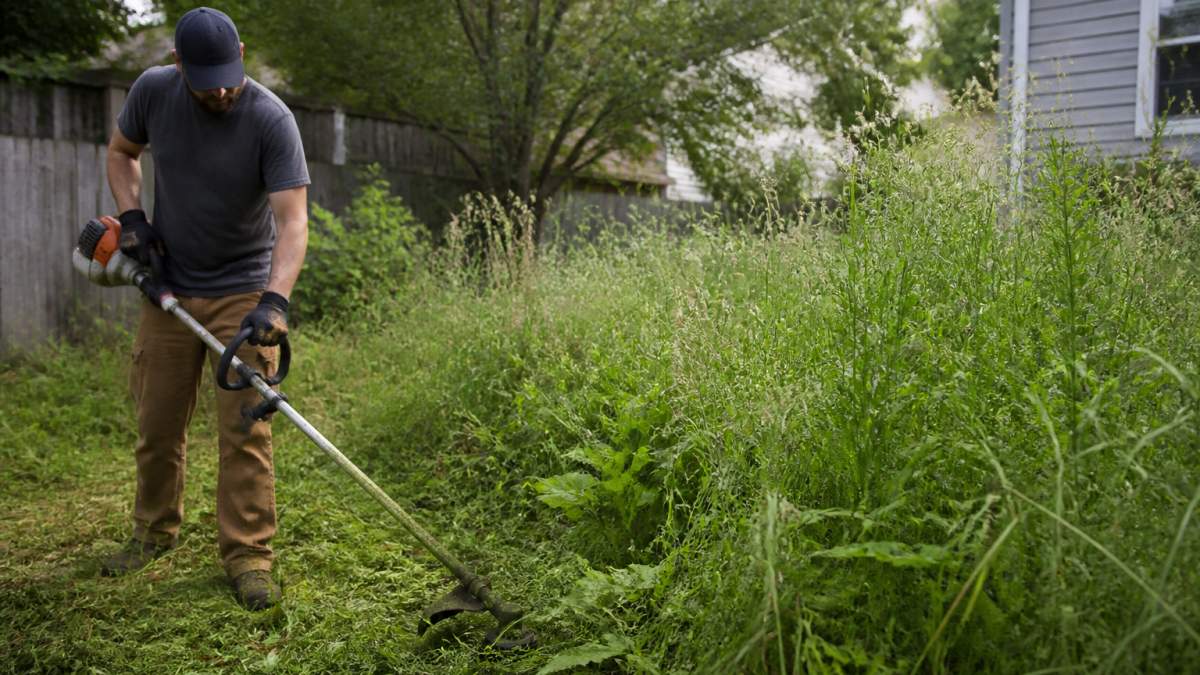
For overgrown properties, this is where a landscape transformation happens. Clearing, regrading, and rebuilding beds takes real equipment, so ask whether a provider handles larger projects or subcontracts them.
Pro Tip Ask to see project photos from jobs completed at least two years ago, not just last season. Hardscape and plantings that still look right after two full winters tell you far more about installation quality than a fresh job photo.
Tree Trimming, Removal, and Seasonal Cleanup
Tree trimming and removal, pruning, mulching, leaf removal, and snow removal round out the exterior maintenance calendar. Pruning shapes growth and removes deadwood for plant health; trimming is about clearance and appearance.
Seasonal cleanup typically runs twice a year, in spring and fall, and includes bed edging, leaf removal, perennial cutback, and fresh mulch. Properties that skip fall cleanup pay for it in spring with turf damage under matted leaves.
Questions to Ask a Landscaper Before You Hire
The best predictor of a good outcome is the questions you ask before signing. A provider who answers these clearly usually shows up when scheduled.
Who will actually be on my property? Ask whether the same crew services your route each visit or whether it rotates.
What's included in the base price, and what costs extra? Edge trimming, hauling clippings, and bed weeding are the usual add-ons.
How do you handle missed visits? Rain happens. Ask whether the visit is rescheduled, credited, or skipped.
A common mistake is asking only about price. The second question homeowners forget is communication: how you'll be told when a crew is coming, when a visit is delayed, or when a project phase is complete.
How Landscaping Estimates Work and What Drives the Price
Landscaping estimates are built from three inputs: property size, service frequency, and site conditions. A quarter-acre lot with open access and healthy turf prices differently from the same lot with steep grades, tight gates, or overgrown beds needing a first-cut cleanup.
What almost no directory listing tells you is how to read the number once it arrives. The framework below is the one we use when we walk a property, and it works whether you hire us or someone else.
What a Written Estimate Should Itemize
A usable estimate breaks the work into line items rather than one lump total. At minimum, look for:
Mowing frequency and per-visit price (weekly, biweekly, or monthly)
Trimming and edging, listed separately or bundled, but stated either way
Clipping cleanup and blow-off of drives, walks, and patios
If two estimates differ by hundreds of dollars a month, the gap is almost always in these line items, not the mowing. Compare the itemized scope, not the bottom line.
The Factors That Move Price Most
In rough order of impact on a residential quote:
Starting condition. A neglected property with overgrown beds and matted leaves can take two to three times the labor of a maintained one on the first visit.
Access and terrain. Steep slopes, narrow gates, fence lines, and obstacles slow every pass and sometimes require walk-behind or string-trim-only equipment.
Frequency. Weekly service costs more per month than biweekly, but keeps turf healthier and usually lowers the per-visit rate because the property never gets ahead of the crew.
Bundled add-ons. Mulching, bed weed control, aeration, and leaf removal cost less scheduled inside a plan than ordered as one-offs.
Hardscape and installation. Patios, walkways, retaining walls, and plantings are priced per project, not per visit.
How to Compare Two Quotes Side by Side
Put both estimates side by side and answer four questions:
Same scope? Does each quote include edging, clipping cleanup, and bed weeding, or does one quietly leave them out?
Same frequency? A biweekly quote will always look cheaper than a weekly one, that is not a savings, it is a different service.
Same disposal? Ask where clippings, leaves, and branches go and who pays for haul-away.
A lower total that excludes bed weeding and clipping haul-away is not actually lower. It is a smaller job.
What Free Estimates Should Include
A reputable provider offers a free on-site estimate and walks the property with you. Expect it to cover:
A measurement or lot-size confirmation
A walkthrough of problem areas (drainage, shade, slopes, bare spots)
A written scope with line items and frequency
If a quote arrives without anyone visiting the property, treat it as a placeholder. If a provider refuses to put scope in writing, that is your answer.
Pro Tip Ask each provider to quote the same scope on the same frequency. Apples-to-apples quotes are the only ones worth comparing, and a provider who resists itemizing is telling you something about how the relationship will go.
Where the Money Actually Goes
Most of a maintenance quote is labor and equipment time, not materials. That is why access, terrain, and starting condition matter more than lot size alone. A flat, open half-acre can price close to a cluttered quarter-acre because the crew moves faster with larger equipment.
Monthly Lawn Care Plans: What Belongs in Yours
Monthly lawn care plans convert a stack of one-off invoices into one predictable payment, and the good ones spell out what happens each month. Here's a twelve-month framework we use locally:
Season | Core Services | Frequency |
Spring | Cleanup, mulch refresh, first mow, weed control | Weekly mowing begins |
Summer | Mowing, trimming, edging, irrigation checks | Weekly |
Fall | Leaf removal, aeration, final cut, bed cutback | Weekly to biweekly |
Winter | Snow removal, hardscape and tree work scheduling | On call |
A plan worth signing includes mowing, trimming, edging, clipping cleanup, and a defined number of cleanup visits. Anything beyond that, such as mulching or bed weed control, should be a line item so you can see what you're paying for.
Watch Out Watch for plans that bill monthly year-round but only service nine months. If winter months carry no snow removal or tree work, ask what you're paying for in January.
Reading Landscaping Company Reviews Without Getting Fooled
Landscaping company reviews are most useful when you read for patterns, not star averages.
Look for reviews naming a specific service and outcome. "They mowed my lawn" is noise. "They cleared two years of overgrowth in the back beds in a day" tells you the company handles bigger projects.
Check the Better Business Bureau profile alongside Google reviews.
Licensing, Insurance, and Verifying a Local Provider
Verification takes about ten minutes and protects you from the most expensive hiring mistake. Most homeowners never do it, and most directory listings never explain how. Here is the process.
What to Ask For, in Writing
Request these documents before work begins, not after:
Certificate of insurance showing general liability coverage, with the provider named as the insured and the policy still active
Workers' compensation certificate if the company has employees, this is separate from general liability
Commercial auto coverage if crews drive to your property in company vehicles
A verbal "yes, we're insured" is not verification. Ask for the certificate, and have the insurer or agent listed on it confirm the policy is current if anything looks off.
How to Read a Certificate of Insurance
A certificate of insurance (often called a COI) is a one-page summary. Check four things:
Named insured matches the company you are hiring, not a similar-sounding entity.
Policy effective dates cover the period you will be receiving service.
General liability limits are stated in dollars per occurrence and in aggregate.
Certificate holder, you can ask to be listed so you receive notice if the policy lapses. (Only available in select situations)
If the certificate is expired, names a different company, or shows unusually low limits for the work, ask questions before signing.
Why Workers' Compensation Matters to You
If a crew member is injured on your property and the company lacks workers' compensation, the claim can land on your homeowner's policy, the most common reason a routine landscaping job becomes an insurance dispute. General liability covers damage to your property; workers' compensation covers crew injuries. They are not interchangeable, and a provider carrying only one is half-covered.
Verifying a Provider Without Relying on Their Word
A few checks that take minutes:
Better Business Bureau profile, look at accreditation status and how the business responds to complaints, not just the letter grade.
State and local business registration, confirm the business name and status through the appropriate state agency.
Google and review platforms, read for patterns across recent reviews, not the star average.
Red Flags Worth Walking Away From
No written estimate or contract
Requests for full payment up front in cash
No physical business address or verifiable phone number
Watch Out Storm-chasing crews are common after heavy weather. A legitimate local provider will still be reachable next season. If the only way to get the quoted price is to sign today, the price is not the real number.
What to Keep After You Hire
Once you have signed, keep a folder, digital or paper, with the signed agreement, current certificate of insurance, itemized scope, and any change orders. If a dispute arises, that folder is your protection. If a provider changes ownership, insurance, or scope mid-season, ask for updated documents.
Key Takeaway A provider who offers a certificate of insurance and a written agreement without being pushed is almost always the one who also shows up on schedule. The paperwork and the reliability tend to come from the same place.
Residential vs. Commercial Landscaping Services: Different Needs, Different Providers
Residential and commercial landscaping look similar from the street but run on different requirements. Homeowners care about curb appeal, plant health, and a predictable monthly bill.
Commercial landscaping usually means larger acreage, multiple properties on one contract, and a service window outside business hours.
For homeowners, the deciding factor is whether the provider can grow with the property.
Conclusion
Finding reliable professional landscaping services Muncie property owners can trust comes down to verification, clear scope, and a provider who answers questions directly. Smith Family Services is a locally owned, family-operated team serving Muncie, Yorktown, and Royerton with over seven years of experience, free estimates, price matching that can save up to 25%, and veteran and senior discounts.
Frequently Asked Questions
What should I look for when hiring professional landscaping services in Muncie?
Start with proof of licensing and insurance, then ask how long the company has served the area. Request a written estimate that lists every task, not a lump sum. Check landscaping company reviews for patterns, not single complaints. Confirm who will actually be on your property each visit and how scheduling or weather delays get communicated. A provider that answers these plainly before you sign is usually the safer hire.
How do I compare landscaping estimates fairly?
Line up the scope before you compare numbers. One quote may include mulching, edging, and leaf removal while another covers mowing only, which makes the totals meaningless side by side. Ask each provider to itemize mowing frequency, trimming, weed control, cleanup, and any irrigation work separately. Then compare on the same scope. Free estimates and written quotes make this easier.
What is typically included in monthly lawn care plans?
Most monthly lawn care plans bundle recurring mowing, edging, string trimming, and blowing of clippings, with seasonal add-ons like mulching, aeration, leaf removal, and snow removal in winter. Frequency usually shifts with the growing season, weekly in spring and summer, less often in cooler months. Ask whether weed control and fertilization are included or billed separately, and whether the plan locks you into a term or lets you pause.
How can I tell if a landscaping company is reliable?
Look for a local address and a track record of several years in the same service area, since established providers have more to lose by no-showing. Ask for project photos from jobs similar to yours, and request two or three references you can actually call. Check landscaping company reviews across more than one platform. Finally, ask directly what happens if a scheduled visit is missed, and get the answer in writing before the first service.
LEARN MORE


Comments